Posts

Showing posts with the label Die Casting

Die Casting: Precision Manufacturing at Scale

Image
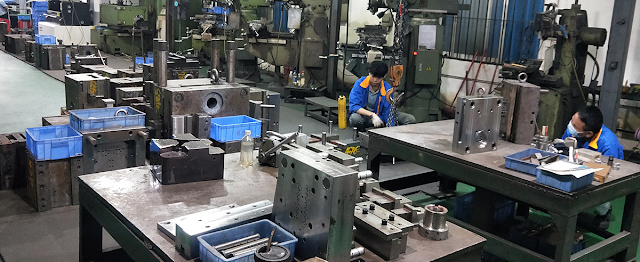
Die casting is a sophisticated manufacturing process known for its ability to produce high-precision, complex parts with remarkable efficiency. This method, widely utilized across industries ranging from automotive to electronics, hinges on the precise injection of molten metal into a reusable steel mould, or dies. Let’s explore how die casting has become a cornerstone of modern manufacturing. The Die Casting Process Die casting involves injecting molten metal, typically aluminum or zinc alloys, into a die cavity under high pressure. This pressure ensures that the liquid metal fills the intricate details of the die, resulting in parts with consistent dimensions and fine surface finishes. Once the metal solidifies, the die opens, revealing the finished product. This method allows for rapid production cycles and the creation of parts with complex geometries that would be difficult or impossible to achieve with other manufacturing processes. Applications across Industries The versatility...

Vacuum Casting is a Specialized Manufacturing Technique

Image
Vacuum casting , also known as resin casting or polyurethane casting, is a manufacturing process used to create small series of high-quality plastic or rubber parts. It's particularly useful for producing prototypes, functional models, and low-volume production runs where the cost of injection molding would be prohibitive. Process Overview: Master Pattern Preparation : A master pattern of the desired part is created using methods like 3D printing, CNC machining, or handcrafted models. This master pattern must be precise and typically made from materials like wax, plastic, or metal. Mold Creation : A silicone mold is made around the master pattern. Silicone is chosen for its flexibility, durability, and ability to capture intricate details from the master pattern. The mold is typically created in two halves to allow for easy removal of the pattern. Vacuum Casting Process : Mold Preparation : The silicone mold halves are se...

CNC machining offers several advantages over conventional machining methods

Image
CNC machining is a manufacturing process that involves the use of computerized machines to remove material from a workpiece to create a custom-designed part or product. Here's a more detailed look at CNC machining: Computer-Aided Design (CAD) : The process begins with creating a digital model of the desired part using CAD software. This model includes detailed specifications such as dimensions, tolerances, and surface finishes. Computer-Aided Manufacturing (CAM) : Once the CAD model is ready, CAM software is used to generate tool paths and instructions for the CNC machine. These instructions dictate the movements of the cutting tools and the removal of material from the workpiece. Material Selection and Work Piece Preparation : The appropriate raw material is chosen based on the requirements of the part. This could be metal, plastic, wood, or other materials. The raw material is then secured onto...

Top Boons of 5-axis CNC Machining

Image
5 axis machining is now the most feasible choice for all types of machining jobs, not only the most difficult ones that require longer tool reach. 5-axis CNC machining is widely utilized for the most complex and precise jobs. This manufacturing approach is expected to provide significantly improved precision. 5-axis custom machining services provide a variety of advantages  Higher speed 5-axis machining allows the use of shorter cutting tools since the head may be lowered and the cutter is directed to the surface. You might expect better outcomes by increasing cutting speed and tool vibration. Increased productivity One of the most time-consuming parts of 3-axis machining is setting up a workpiece many times because it needs to be reoriented. This is required if an item needs to be machined on all or multiple sides, as the cutting tool remains at a fixed ang...

Working of Vacuum Casting and Its Multiple Uses

Image
To make complicated components, a liquid substance is sucked into a silicone mold under vacuum. This method is known as  vacuum casting . Rubber and plastic are examples of elastomers that are utilized as liquid materials in vacuum casting. Since polyurethane resin, a kind of elastomer is employed as the casting medium, vacuum casting is also frequently referred to as polyurethane casting or urethane casting. When producing plastic components, vacuum casting is a more cost-effective method than injection molding because of its reduced manufacturing costs.   For batch manufacturing and other low-volume production tasks, vacuum casting is a great method of production. Vacuum casting is widely utilized in India's manufacturing of industrial electronics, FMCG, and consumer goods.   How do you work with vacuum casting? Injection molding, in which cast material is poured into molds to create items, and vacuum casting services are very comparable processes. The kinds o...

Know About the Post-Processing in Rapid Prototyping

Image
Rapid Prototyping China is a ray of efficiency and inventiveness in the field of product development and innovation. By offering quick iterations and concrete concept representations, it transforms conventional methodologies. However, inside this miracle of contemporary engineering, there is a critical—often disregarded but unquestionably necessary—step called post-processing. It's the period of transformation that unlocks the actual potential of a rough prototype and turns it into a polished masterpiece.  Enhancement of Visual Appeal Even in the world of prototypes, first impressions count. Post-processing makes it possible to improve the visual appeal of a prototype by removing flaws and rounding off edges. Simple models may be transformed into visually beautiful representations by using techniques like painting, polishing, or sanding, which can improve the model's aesthetic appeal and professionalism. The perception of a product is greatly influenced by its aesthetics, which...

Learn About the Basics of Urethane Casting

Image
Within the dynamic realm of production and prototyping,  urethane casting  is a unique technology that provides cost-effectiveness, accuracy, and diversity. Urethane casting has become the industry standard for a variety of applications, from complex prototypes to small-batch production runs, including consumer electronics, medical equipment, and the automotive and aerospace sectors.  Gratitude Casting of Urethane The first step in the procedure is to create a master pattern, which is usually done via fast prototyping techniques like CNC machining or 3D printing. The silicone molds that are made from this master pattern are used to pour polyurethane resin into. The resin mimics the fine features of the master design once it has dried, producing pieces that are excellent and ready for manufacturing. Flexibility throughout Sectors The adaptability of urethane casting across sectors is one of its most noteworthy benefits. Urethane casting may be used for a variety of purpose...

Quality Control and Process Monitoring in Die Casting

Image
Die casting is a flexible and effective manufacturing technique used in many different sectors to produce intricate and superior metal parts. Manufacturers depend on strict quality control and process monitoring to guarantee the creation of perfect parts. We will examine the crucial facets of process monitoring and quality control in die casting in this blog article, as well as how these procedures affect the manufacturing process's overall performance. The significance of process observation Temperature Control: For die casting, maintaining accurate temperatures is essential. Deviations may have an impact on the end product's overall quality as well as the metal's flow and solidification. To maintain uniformity and lower the possibility of faults, sophisticated monitoring systems continually measure and modify temperatures. Pressure Monitoring : To adequately fill the mold, die casting requires high pressure. It's crucial to keep an eye on pressure throughout the inje...

The Fundamental Principles of Mastering Die Casting

Image
Die casting  is a flexible and popular manufacturing technique that uses the injection of molten metal into a mold cavity to produce intricate and accurate metal objects. Understanding the fundamentals of die casting is essential whether you're a beginner learning about the industry or a seasoned practitioner trying to expand your knowledge. Pressure: The Motive of Die Casting Injection:  The initial pressure used to force molten metal into the mold cavity is pressure. To avoid turbulence and provide a smooth, even fill, it should be carefully managed. The size, intricacy, and kind of alloy used in the casting, among other things, affect the choice of injection pressure. Holding Pressure : Following injection, holding pressure is used to keep the metal in the mold cavity until it hardens. Shrinkage and porosity problems are avoided by using the proper holding pressure. To prevent over-packing the mold, it's essential to maintain a bal...