Posts

Showing posts with the label Casting China

Die Casting: Precision Manufacturing at Scale

Image
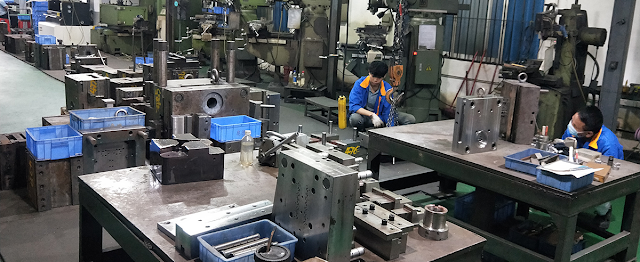
Die casting is a sophisticated manufacturing process known for its ability to produce high-precision, complex parts with remarkable efficiency. This method, widely utilized across industries ranging from automotive to electronics, hinges on the precise injection of molten metal into a reusable steel mould, or dies. Let’s explore how die casting has become a cornerstone of modern manufacturing. The Die Casting Process Die casting involves injecting molten metal, typically aluminum or zinc alloys, into a die cavity under high pressure. This pressure ensures that the liquid metal fills the intricate details of the die, resulting in parts with consistent dimensions and fine surface finishes. Once the metal solidifies, the die opens, revealing the finished product. This method allows for rapid production cycles and the creation of parts with complex geometries that would be difficult or impossible to achieve with other manufacturing processes. Applications across Industries The versatility...

Vacuum Casting is a Specialized Manufacturing Technique

Image
Vacuum casting , also known as resin casting or polyurethane casting, is a manufacturing process used to create small series of high-quality plastic or rubber parts. It's particularly useful for producing prototypes, functional models, and low-volume production runs where the cost of injection molding would be prohibitive. Process Overview: Master Pattern Preparation : A master pattern of the desired part is created using methods like 3D printing, CNC machining, or handcrafted models. This master pattern must be precise and typically made from materials like wax, plastic, or metal. Mold Creation : A silicone mold is made around the master pattern. Silicone is chosen for its flexibility, durability, and ability to capture intricate details from the master pattern. The mold is typically created in two halves to allow for easy removal of the pattern. Vacuum Casting Process : Mold Preparation : The silicone mold halves are se...

Working of Vacuum Casting and Its Multiple Uses

Image
To make complicated components, a liquid substance is sucked into a silicone mold under vacuum. This method is known as  vacuum casting . Rubber and plastic are examples of elastomers that are utilized as liquid materials in vacuum casting. Since polyurethane resin, a kind of elastomer is employed as the casting medium, vacuum casting is also frequently referred to as polyurethane casting or urethane casting. When producing plastic components, vacuum casting is a more cost-effective method than injection molding because of its reduced manufacturing costs.   For batch manufacturing and other low-volume production tasks, vacuum casting is a great method of production. Vacuum casting is widely utilized in India's manufacturing of industrial electronics, FMCG, and consumer goods.   How do you work with vacuum casting? Injection molding, in which cast material is poured into molds to create items, and vacuum casting services are very comparable processes. The kinds o...

Learn About the Basics of Urethane Casting

Image
Within the dynamic realm of production and prototyping,  urethane casting  is a unique technology that provides cost-effectiveness, accuracy, and diversity. Urethane casting has become the industry standard for a variety of applications, from complex prototypes to small-batch production runs, including consumer electronics, medical equipment, and the automotive and aerospace sectors.  Gratitude Casting of Urethane The first step in the procedure is to create a master pattern, which is usually done via fast prototyping techniques like CNC machining or 3D printing. The silicone molds that are made from this master pattern are used to pour polyurethane resin into. The resin mimics the fine features of the master design once it has dried, producing pieces that are excellent and ready for manufacturing. Flexibility throughout Sectors The adaptability of urethane casting across sectors is one of its most noteworthy benefits. Urethane casting may be used for a variety of purpose...

Exploring the Art and Science of Vacuum Casting

Image
A vacuum is used in the  vacuum casting  process to force molten metal into a mold. When working with sophisticated designs and small-scale manufacturing runs, this method is quite helpful. In contrast to conventional casting techniques, vacuum casting provides unmatched accuracy and consistency. Overview of the Process Master Model Development:  The first step in the procedure is to create a master model, which is usually made of a variety of materials including silicone, foam, or wax. Making the Mold:  After that, a silicone mold is made around the master model. Several duplicates of the original model will subsequently be made using this mold. Vacuum Casting Chamber : Air and other gases are extracted from the mold cavity by placing the mold within a vacuum casting chamber. Metal Injection : In a vacuum, molten metal is injected into the mold. High-quality, intricate reproductions are produced by making sure that the metal fills every nook and corner of ...

Quality Control and Process Monitoring in Die Casting

Image
Die casting is a flexible and effective manufacturing technique used in many different sectors to produce intricate and superior metal parts. Manufacturers depend on strict quality control and process monitoring to guarantee the creation of perfect parts. We will examine the crucial facets of process monitoring and quality control in die casting in this blog article, as well as how these procedures affect the manufacturing process's overall performance. The significance of process observation Temperature Control: For die casting, maintaining accurate temperatures is essential. Deviations may have an impact on the end product's overall quality as well as the metal's flow and solidification. To maintain uniformity and lower the possibility of faults, sophisticated monitoring systems continually measure and modify temperatures. Pressure Monitoring : To adequately fill the mold, die casting requires high pressure. It's crucial to keep an eye on pressure throughout the inje...

Environmental Sustainability in Sheet Metal Fabrication

Image
In an era where environmental sustainability is critical, every industry must endeavor to lessen its environmental imprint.  Sheet metal fabrication , a crucial industry area, is no exception. Sheet metal manufacturing may dramatically reduce waste and energy consumption by embracing eco-friendly processes and materials, so contributing to a more sustainable future.   Machinery that saves energy The machinery used to cut, bend, and shape metal is at the heart of sheet metal manufacturing. There has been a substantial trend in recent years toward the use of energy-efficient gear. These machines are designed to minimize overall energy usage by optimizing energy use, reducing heat waste, and operating at greater speeds. Companies are investing in cutting-edge technology that not only increases production but also decreases environmental effects.   Environmentally Friendly and Recycled Materials  Material selection is critical in the quest for environmental sustainabilit...

The Fundamental Principles of Mastering Die Casting

Image
Die casting  is a flexible and popular manufacturing technique that uses the injection of molten metal into a mold cavity to produce intricate and accurate metal objects. Understanding the fundamentals of die casting is essential whether you're a beginner learning about the industry or a seasoned practitioner trying to expand your knowledge. Pressure: The Motive of Die Casting Injection:  The initial pressure used to force molten metal into the mold cavity is pressure. To avoid turbulence and provide a smooth, even fill, it should be carefully managed. The size, intricacy, and kind of alloy used in the casting, among other things, affect the choice of injection pressure. Holding Pressure : Following injection, holding pressure is used to keep the metal in the mold cavity until it hardens. Shrinkage and porosity problems are avoided by using the proper holding pressure. To prevent over-packing the mold, it's essential to maintain a bal...